

You might wonder, how many amps does a typical power tool use? Most small tools use 2–8 amps, while large ones need 6–16 amps. Cordless tools can draw much higher amps, especially at peak loads.
| Tool Type | Voltage | Amperage | Total Watts |
|---|---|---|---|
| Corded | 120V | 15A | 1800W |
| Cordless | 18V | 15A | 270W |
| Cordless | 36V | 15A | 540W |
| Cordless | 18V | 100A | 1800W |
| Cordless | 36V | 50A | 1800W |
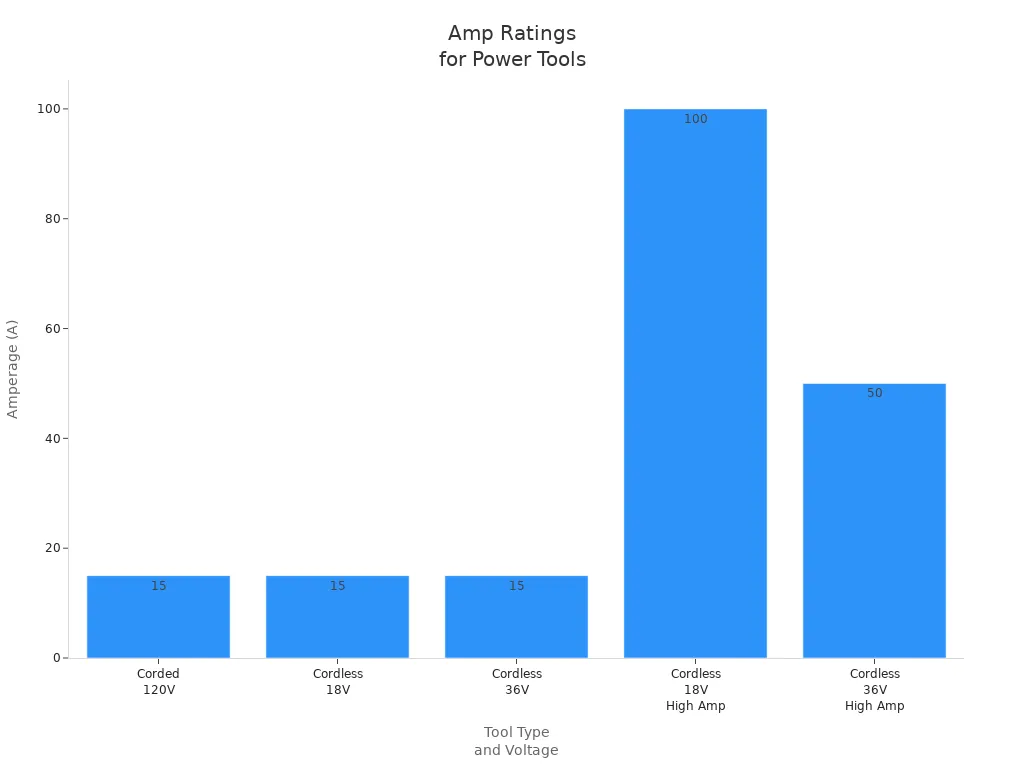
Knowing amp ratings helps you prevent overload and work safely with your tools.
Looking for power tools with the right amp ratings and optimal performance?
Contact us for factory-direct pricing, bulk orders, and custom solutions.
Key Takeaways
- Most small power tools use 2 to 8 amps. Bigger tools need 6 to 16 amps. Always look at your tool’s label for the amp rating.
- Cordless tools can use much more amps, especially when working hard. For example, a cordless lawnmower can use up to 50 amps.
- Knowing amp ratings helps you stop overloads and keeps you safe. Only use 80% of an outlet’s power to stay safe.
How Many Amps Does a Typical Power Tool Use
Typical Power Tool Amp Range
When you want to know how many amps a power tool uses, you should think about the tool’s size and type. Small tools like jigsaws and sanders use about 2 to 8 amps. Bigger tools, such as circular saws and heavy-duty drills, need more power. They often use between 6 and 16 amps. You can see the amp ranges for each group in the table below:
| Tool Type | Amp Range |
|---|---|
| Light-duty tools | 6–8 amps |
| Mid-range tools | 9–12 amps |
| Heavy-duty tools | 13+ amps |
Most homes have enough power for these tools. To be safe, check your circuit breaker ratings. Workshops at home usually use 15A or 20A breakers. If you run many tools at once, you might need more amps. Older houses may have 60-amp service. Newer homes often have 100-amp or 200-amp service. Big homes or all-electric homes can need up to 400 amps.
Entry-level tools do not need as much power. Professional tools need more power for hard jobs. The table below shows how they are different:
| Category | Entry-Level Tools | Professional-Grade Tools |
|---|---|---|
| Power Requirements | Lower power | Higher power output |
| Durability | Consumer-grade | Industrial-grade |
| Features | Simpler | Advanced and adjustable |
| Price Range | Budget to mid-range | Higher investment |
| Warranty | Occasional use | Extended with service options |
If you want to know the amps for a certain tool, check this quick guide:
| Tool Type | Power (W) | Amps (A) |
|---|---|---|
| Circular Saw | 1400W | 11.6 A |
| Angle Grinder | 840W | 7 A |
| Jigsaw | 300W | 2.5 A |
These numbers help you figure out how many amps your tool uses. Always look at your tool’s label for the exact amp rating.
Cordless Power Tools
Cordless power tools are different from corded ones. You might ask how many amps a cordless tool uses. Cordless tools can use more amps, especially when working hard. For example, a cordless lawnmower can use up to 50 amps at its highest power. A shop vac can use up to 30 amps. The chart below shows the most amps some cordless tools can use:
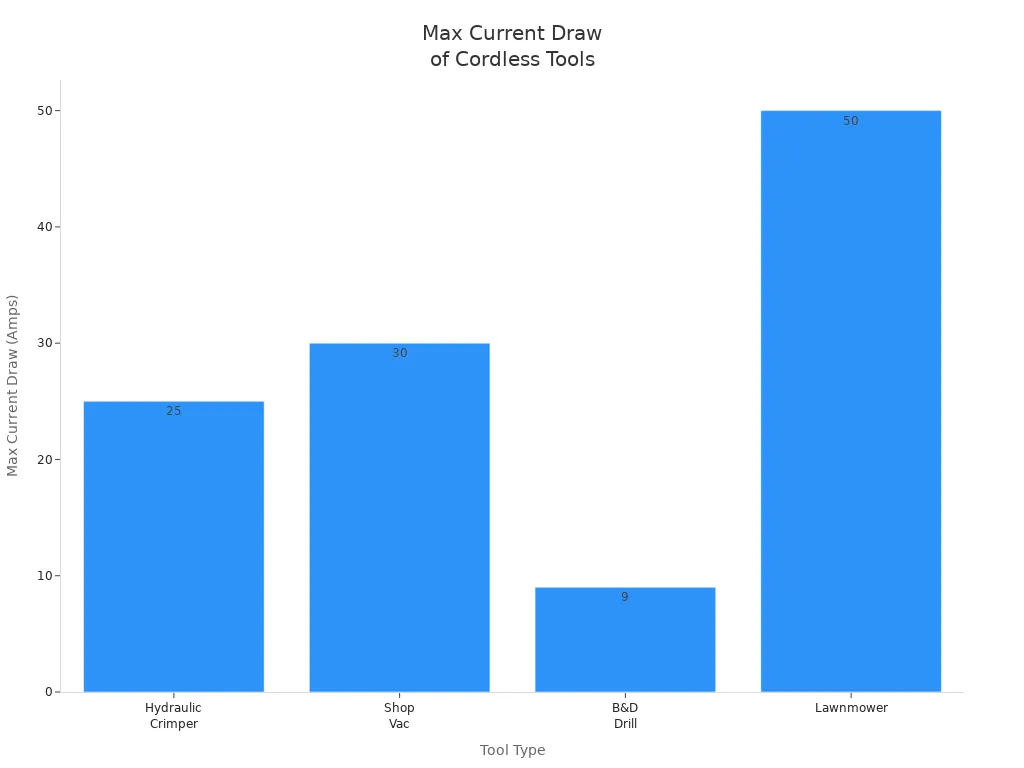
| Tool Type | Voltage | Max Current Draw | Typical Current Draw |
|---|---|---|---|
| Hydraulic Crimper | 14.4V | 25-30 Amps | N/A |
| Shop Vac | 19.2V | 30 Amps | N/A |
| B&D Drill | 24V | 9 Amps | 7 Amps |
| Lawnmower | 24V | 50 Amps | N/A |
It is important to know how battery voltage and amp-hours affect amp use. Here are some things to remember:
- Battery voltage changes how strong the tool is. Higher voltage batteries are better for tough work.
- Amp-hours tell you how long the battery will last. More amp-hours mean you can use the tool longer.
- Amp-hours show how much charge the battery holds. This helps you guess how long you can use your tool before charging.
Amp ratings for cordless tools are different for each brand and model. Some brands have batteries from 18 volts to 80 volts. Higher voltage batteries are best for big jobs. Battery size, measured in amp-hours, also changes how long your tool works. Even with one brand, different models can have different amp ratings.
Tip: Always check the battery label for voltage and amp-hour ratings before you buy or use a cordless tool.
You can find out how many amps your tool uses by checking the specs for your tool and battery. If you use many cordless tools at the same time, make sure your chargers and outlets can handle it. This keeps your tools safe and stops overloads.
Amp Usage and Safety
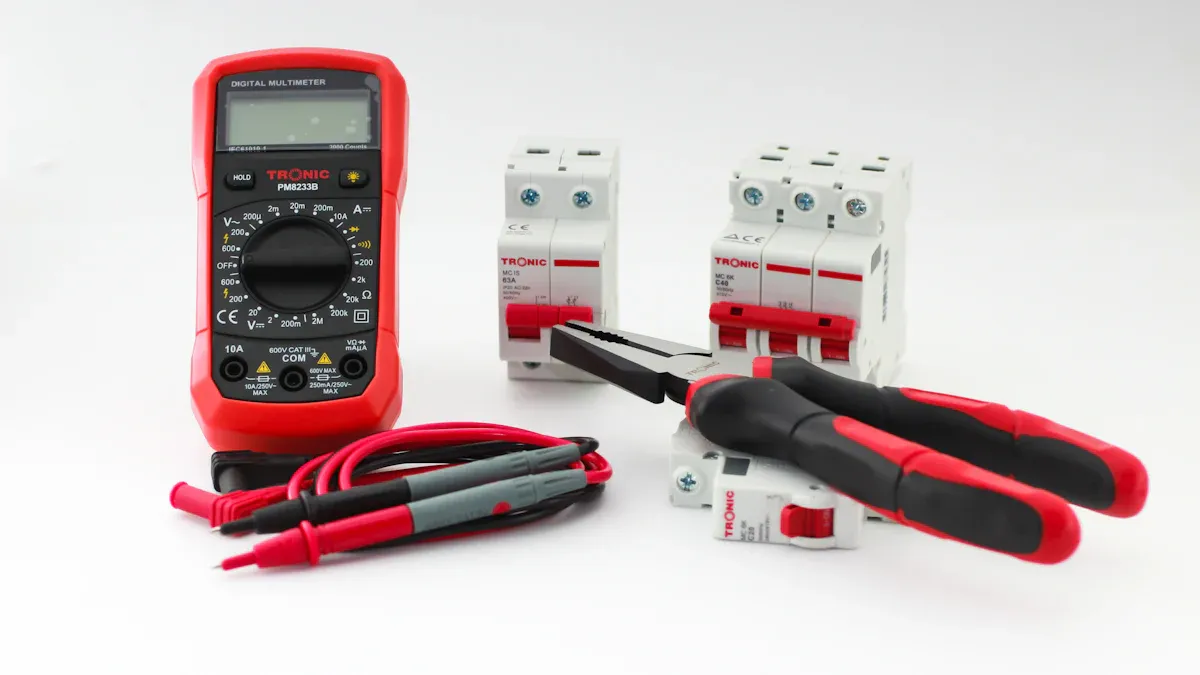
Understanding amp ratings is important for your safety when using power tools. If you know how many amps your tools use, you can match them to the right outlets and avoid electrical overload. Most homes have 15-amp or 20-amp outlets. The National Electric Code suggests you use only 80% of an outlet’s capacity to stay safe.
| Electrical Load Capacity | Maximum Wattage | Safety Limit (80%) |
|---|---|---|
| 15-amp outlet | 1,800 watts | 1,440 watts |
| 20-amp outlet | 2,400 watts | 1,920 watts |
Tip: Never plug too many power tools into one outlet. This helps prevent tripped breakers and keeps your workshop safe.
Startup vs Running Amps
When you turn on a power tool, it often uses more amps for a short time. This is called the startup amp. After the tool starts, it uses fewer amps, known as the running amp. For example, a stationary saw might need 10 amps to run but could spike to 12 or 13 amps at startup. Always plan for these surges, especially if you use several tools at once.
- Multiply the amperage of stationary tools by 125% to account for startup surges.
- Add up the power tool amps for all tools you plan to use at the same time.
- Make sure the total does not go over your outlet’s safety limit.
Power Tools: Amp Ratings
You will see amp ratings on every power tool. These numbers tell you how much current the tool needs. Amps measure the flow of electricity, volts show the force, and watts tell you the total power used (watts = volts × amps). When you compare power tools, think about your needs:
- For light jobs, a 12V tool kit is easy to handle.
- For heavy work, choose 18V or 20V tools for more power.
- High-efficiency motors use less electricity for the same job.
Managing Electricity Consumption
You can save energy and keep your workshop safe by watching your amp usage. Many professional shops use real-time monitors to track power tool amps. Some tools have features like auto standby mode, which saves power when not in use. Plan your tool layout so you do not overload any one outlet. Always check the amperage requirements before adding new power tools to your setup.
You can keep your workshop safe by understanding amp usage for power tools. Always check your tool’s amp rating before you use it. Follow these manufacturer guidelines for safe use:
- Use the proper tool for the job.
- Inspect power tools before each use.
- Keep safety guards in place.
- Store tools safely.
- Never leave tools unattended.
- Store tools in a dry place.
- Avoid damp locations unless grounded.
- Disconnect tools when not in use.
- Wear personal protective equipment.
FAQ
How do you find the amp rating for your power tools?
You can check the label on your tool or read the manual. The amp rating tells you how much current your tool needs.
Why does power tool wattage matter?
Power tool wattage shows how much energy your tool uses. You can use this number to match your tool to the right outlet.
What are high-demand tools?
High-demand tools need more power to run. These tools include table saws and air compressors. You should use them on dedicated circuits.
Need reliable power tools optimized for your electrical setup?
Get in touch for wholesale quotes and professional support.


