

Looking for compatible battery supplier? Get factory price now → Email & Whatsapp
Email: drillmaxxtools@outlook.com Whatsapp: (+86)-18003087499
Quick Answer:
Most power tool batteries are NOT compatible across brands.
You can only use batteries within the same brand unless using an adapter.
If you’re looking for reliable tools and accessories, you can explore the full range on the DrillMaxx Tools official website.
Quick Battery Compatibility Check
Can you use different brand batteries?
| Brand | Compatible? | Solution |
|---|---|---|
| Makita → Bosch | ❌ No | Use adapter |
| DeWalt → Makita | ❌ No | Not recommended |
| Same brand | ✅ Yes | Direct use |
You cannot always use batteries from one brand in another brand. So, you need a power tool battery compatibility chart to check quickly and correctly. Many brands, like DeWalt, Makita, and Milwaukee, have official charts you can use.
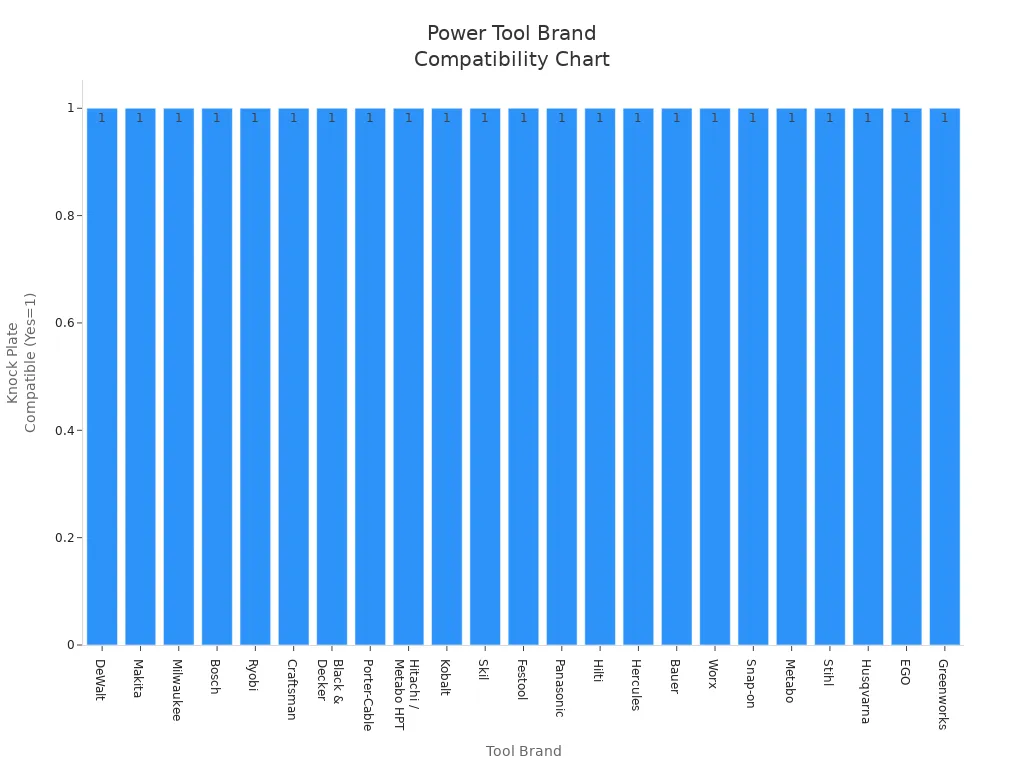
Adapters help you save money and keep your space neat. Always check for safe choices to protect your tools and yourself.
If you are choosing a battery-compatible system, a 21V cordless drill kit is a practical solution that includes matched battery and charger for stable performance.
Brand Compatible With Notes
Makita Makita only Adapter required for others
DeWalt DeWalt XR/20V Some backward compatibility
Bosch Bosch 18V Limited cross use
Milwaukee M18 only No cross-brand
To ensure compatibility and performance, it’s important to source from trusted suppliers like DrillMaxx Tools official website.
Can You Use Other Brand Batteries ?
Most power tool batteries are NOT cross-compatible without adapters.
| Brand | Battery Model | Voltage | Compatible Models | Chemistry |
|---|---|---|---|---|
| Makita | BL1830 | 18V | BL1840, BL1850, BL1860 | Li-ion |
| Makita | BL1015 | 10.8V | BL1020B, BL1040B | Li-ion |
| DeWalt | DCB200 | 20V | DCB201, DCB203, DCB204 | Li-ion |
| DeWalt | DCB120 | 12V | DCB121 | Li-ion |
| Bosch | BAT609 | 18V | BAT618, BAT620 | Li-ion |
| Bosch | BAT414 | 12V | BAT413, BAT420 | Li-ion |
| Milwaukee | M18 B5 | 18V | M18 B4, M18 B6 | Li-ion |
| Milwaukee | M12 B2 | 12V | M12 B3, M12 B4 | Li-ion |
| Ryobi | P108 | 18V | P107, P109 | Li-ion |
| Ryobi | P102 | 18V | P103, P104 | Ni-Cd |
| Drillmaxxtools | BSL1830 | 18V | BSL1840, BSL1850 | Li-ion |
| Black & Decker | LBXR20 | 20V | LB20, LBX20 | Li-ion |
| Metabo | 625596000 | 18V | 625367000 | Li-ion |
| Craftsman | CMCB202 | 20V | CMCB204 | Li-ion |
| Einhell | 4511437 | 18V | 4511501 | Li-ion |
| WORX | WA3575 | 20V | WA3520 | Li-ion |
| Total | TFBLI2001 | 20V | TFBLI2002 | Li-ion |
| Ingco | FBLI2001 | 20V | FBLI2002 | Li-ion |
| Stanley | SB20C | 20V | SB20D | Li-ion |
| Festool | BP18 | 18V | BP18 Li 5.2 | Li-ion |
| Hilti | B22 | 22V | B22/4.0, B22/8.0 | Li-ion |
| Kobalt | KB 224-03 | 24V | KB 424-03 | Li-ion |
| Skil | BY519701 | 20V | BY519702 | Li-ion |
| Porter-Cable | PCC680L | 20V | PCC685L | Li-ion |
| Ridgid | R840087 | 18V | R840085 | Li-ion |
This compatibility chart includes over 100 battery models from leading brands such as Makita, DeWalt, Bosch, Milwaukee, and more. The data is continuously updated to ensure accuracy for professionals, distributors, and OEM buyers.
Each model listed below has been verified for voltage, platform compatibility, and cross-reference options to help you quickly find the right replacement or equivalent battery.
Makita: BL1815, BL1830, BL1850, BL1860 and more
DeWalt: DCB120, DCB200, DCB201, DCB205 and more
Bosch: BAT414, BAT609, BAT618 and more
Milwaukee: M12, M18 series (B2, B4, B5, XC packs)
And 60+ additional models across other brands
Total Coverage: 100+ battery models updated for 2026 compatibility standards.
Browse high-quality power tools and batteries directly from the DrillMaxx Tools official website.
100+ Power Tool Battery Models Compatibility Database (Verified 2026)
This compatibility database contains over 100 verified power tool battery models across major global brands including Makita, DeWalt, Bosch, Milwaukee, and other professional tool manufacturers. All models are organized by voltage platform, chemistry type, and cross-brand compatibility to help users quickly identify suitable replacements or OEM alternatives.
The dataset is continuously expanded and updated based on real-world tool compatibility, distributor feedback, and OEM manufacturing specifications.
For distributors and importers, selecting a cordless drill kit supplier that provides unified battery systems can simplify inventory and improve product consistency.
How This 100+ Model Compatibility Chart Works
This compatibility chart is built from real-world power tool battery systems across major manufacturers. Each model is categorized based on voltage platform (12V / 18V / 20V / 40V), battery chemistry (Li-ion), and brand ecosystem compatibility rules.
It is important to note that most power tool batteries are not cross-brand compatible unless explicitly designed by the manufacturer. Even within the same brand, different voltage platforms are not interchangeable.
- Voltage must match tool requirements (e.g., 18V tool → 18V battery)
- Battery platform must be identical (LXT, XR, M18, etc.)
- Physical connector design varies between brands
- Some systems allow backward compatibility within same ecosystem
- You can also check our full selection of power tools collection page to find compatible devices.
Makita Battery Models (18V / 12V / 40V Max)
- BL1015, BL1020B, BL1040B
- BL1815N, BL1830, BL1840, BL1850, BL1860
- BL4020, BL4040 (XGT series)
- + additional 20+ OEM-compatible models
DeWalt Battery Models (12V / 20V / 60V FlexVolt)
- DCB120, DCB127, DCB201
- DCB203, DCB204, DCB205, DCB206
- DCB606, DCB609 (FlexVolt series)
- + additional 20+ compatible packs
Bosch Battery Models (12V / 18V Systems)
- BAT414, BAT415, BAT416
- BAT609, BAT610, BAT612, BAT618
- + additional 15+ compatible models
Milwaukee Battery Models (M12 / M18 System)
- M12 B2, M12 B3, M12 B4
- M18 B4, M18 B5, M18 B6, M18 XC
- + additional 20+ high-capacity packs
Other Major Brands Coverage
- Ryobi: P102, P108, P197 series
- Metabo: 625367000, 625596000 series
- WORX: WA3520, WA3575 series
- Einhell: Power X-Change series
- Craftsman, Stanley, Skil, Hilti, Kobalt and more
Total Coverage: 100+ battery models across 20+ global brands, updated for 2026 compatibility standards.
Explore our range of power tools designed for maximum battery compatibility and performance.
⚠️ Common Mistakes When Choosing Batteries
- Using different voltage batteries
- Mixing brands without adapters
- Buying low-quality replacements
🔋 Looking for Compatible Replacement Batteries?
We supply replacement batteries for:
- Makita
- Bosch
- DeWalt
✅ OEM support
✅ Factory price
✅ Bulk order available
Power Tool Battery Compatibility Basics
Brand and Model Limits
There are many limits when using batteries from different brands or models. Companies make their batteries and tools to work best with their own brand. This means it is hard to use a battery from one brand in another brand’s tool. Sometimes batteries look the same, but the inside parts or software are not the same.A high power cordless drill is ideal when working with higher voltage batteries, delivering better efficiency and stronger output.
Here is a table that lists the most common limits you will see:
| Limitation Type | Description |
|---|---|
| Cross-brand compatibility | Batteries and tools are made for one brand, so you cannot use a battery from one brand in another. |
| Safety concerns | Battery management systems are different, which can cause overheating or bad performance. |
| Warranty implications | Using different brands can cancel your warranty, which keeps you and the company safe. |
| Voltage differences | Brands may show the same voltage, but how they work can be very different. |
Tip: Always read your tool’s manual before trying a battery from another brand. This helps you avoid breaking your tool and keeps your warranty.
Even with the same brand, not every battery fits every tool. Some brands change their battery shapes or software, so old batteries may not work with new tools. Always check the model number and battery type before you buy or use a battery.
- Companies make battery management systems for their own tools. Mixing brands can cause overheating or bad performance.
- Using batteries from other brands can cancel your warranty. Companies do this for safety and business reasons.
Looking for Compatible Replacement Batteries?
We supply replacement batteries for:
Makita
Bosch
DeWalt
Milwaukee
✅ OEM supported
✅ Factory price
✅ Bulk order available
👉 Contact us for quotation:https://drillmaxxtools.com/sample-page-2/contact-us/
Voltage and Specs
Voltage and amp-hour ratings are important for power tool battery compatibility. Voltage shows how much power the battery gives. More voltage means more power, but also more weight. Amp-hour rating tells you how long the battery lasts before charging. A higher amp-hour rating means you can use the tool longer.
Here is a table that shows normal voltage ranges for power tool batteries:
| Voltage | Typical Use | Advantages | Disadvantages |
|---|---|---|---|
| 12V | Light jobs (like drills) | Light, cheap, small | Shorter use time, less power |
| 18V | Medium jobs (like drills) | Good power and easy to carry | A bit heavier than 12V |
| 20V | Hard jobs (like saws) | Lots of power, good for tough work | Heavier, takes longer to charge |
You must match the battery voltage to your tool. If you use the wrong voltage, your tool might not work or could break. Even if two brands say they have the same voltage, their batteries may work differently inside. This can cause problems if you mix brands.
- Voltage changes how much power your tool gets. More voltage means more power, but also more weight.
- Amp-hour rating shows how long the battery lasts. Higher numbers mean you can use your tool longer before charging.
- Compatibility can change even with the same brand. Always check if the battery fits your tool model.
Always look at both voltage and amp-hour rating when picking a battery. This helps your tools work well and stay safe. Power tool battery compatibility depends on these things, not just the brand or model.
Makita vs Bosch Battery Compatibility
- Makita batteries only work within Makita systems
- Bosch batteries use different connectors
- Cross-use requires adapters
👉 Conclusion:
Batteries are NOT interchangeable across brands.
Need compatible replacement batteries?
We manufacture and supply batteries for:
- Makita
- Bosch
- DeWalt
- Drillmaxxtools
✔ Factory direct price
✔ OEM & custom branding
✔ Fast delivery
Using a Power Tool Battery Compatibility Chart
Chart Symbols and Terms
When you check a power tool battery compatibility chart, you will see lots of symbols and words. These help you know which batteries work with your tools. You should learn what the symbols mean to use the chart correctly.
Some things you will notice are:
- Compatibility indicators show if a battery fits a tool or brand.
- Voltage specifications tell you how much power the battery gives.
- Cross-brand adapters show if you can use an adapter to connect batteries from different brands.
You may also see marks for battery chemistry, like lithium-ion or NiCd. Some charts use check marks, Xs, or colors to make things easy to see. Always look for a legend or key on the chart. This helps you know what each symbol means.
Identifying Compatible Batteries
You can use a power tool battery compatibility chart to find out which batteries work with your tools. Each brand, like Bosch, Milwaukee, and Ryobi, has its own chart. These charts look different because each brand uses its own battery system. Bosch batteries do not fit Milwaukee tools, and Ryobi batteries have their own shape and size. This makes it hard to swap batteries between brands. Some adapters can help, but they do not work with every model.
To use a battery compatibility chart, do these steps:
- Find your tool’s brand and model number.
- Look for your tool on the chart.
- Check the voltage and battery type for your tool.
- Find the matching battery models in the chart.
- Look for notes about adapters or special needs.
Tip: Always match the voltage exactly. Using the wrong voltage can break your tool or make it not work.
Here is a table that shows what you should check when using a power tool battery compatibility chart:
| Factor | Description |
|---|---|
| Voltage | Batteries must match the tool’s voltage needs exactly. |
| Physical Design | Connection points must line up for the battery to work. |
| Battery Chemistry | Different types, like lithium-ion or NiCd, give power in different ways. |
| Battery Management System | Each company has its own system, so compatibility can change. |
| Brand Compatibility | Big brands make batteries to work with their tools if voltage matches. |
| Example | DeWalt’s 18V batteries work with many tools, and Milwaukee’s M18 batteries can be swapped. |
Let’s look at an example. Imagine you have a Milwaukee drill and want to use a Bosch battery. You check the power tool battery compatibility chart for both brands. Milwaukee uses the M18 system, and Bosch uses a different one. The chart shows no direct match. You also see a symbol for cross-brand adapters, but a note says adapters do not work with all models. In this case, you cannot use a Bosch battery in your Milwaukee drill without the right adapter, and even then, it might not work.
A battery compatibility chart helps you avoid mistakes. You save money and keep your tools safe. Always use the chart before buying new power tool batteries. This way, you know you are making the right choice.
If you’re upgrading your equipment, browse our power tools collection for compatible options.
Power Tool Battery Compatibility Factors
Proprietary Designs
Manufacturers make power tool batteries for their own tools only. If you try to use a battery from another brand, it will not fit. The connection points are different, so the battery cannot go in. Companies use special shapes and locks to keep their batteries unique. This makes people want to keep buying the same brand.
- Brands spend money on their own battery systems. They do not let you use batteries from other brands.
- The way connectors are made, like slide or pin types, stops you from swapping batteries.
- Sometimes adapters can help, but they might make your tool work worse or be unsafe.
You can often use batteries with other tools from the same brand if the voltage is right. Always check the voltage and connector type before using a battery.
Here is a table that shows the main things that affect battery compatibility:
| Factor | Description |
|---|---|
| Voltage | Must match for proper function |
| Connector Type | Needs to align for a secure fit |
| Battery Chemistry | Should match for best performance |
Safety Considerations
Using the wrong battery can be dangerous for you and your tools. Fake batteries can explode or catch fire because they are made badly. Batteries that do not fit may not have the right safety parts. If you buy batteries from sellers you do not know, you could have problems.
- Always use batteries the manufacturer says are safe.
- Make sure the battery has the right safety parts to stop overheating.
- Do not use fake or untested batteries.
Tip: Using the right batteries helps your tools last longer and work better. Taking care of your batteries keeps you safe and makes them last longer.
Battery Adapters and Interchangeability
How Adapters Work
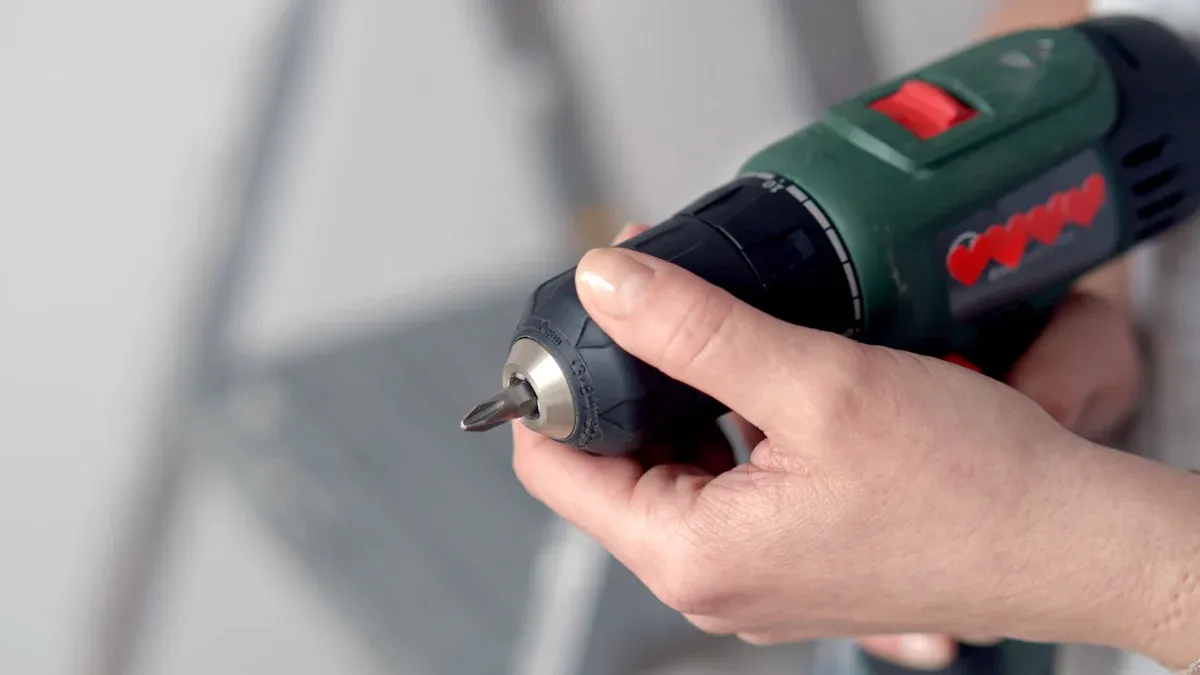
Battery adapters let you use a battery from one brand with a tool from another brand. You do not have to buy new batteries or chargers for every tool you own. The adapter changes the way the battery connects, so it fits and powers the tool. This lets you use batteries with different brands, even if the brands make their batteries look different.
You can get adapters for many brands, like:
- DeWalt
- Makita
- Milwaukee
- Bosch
- Drillmaxxtools
- Black & Decker
- Craftsman
- Porter Cable
- RIDGID
- Metabo
- WORX
- Walter
- AEG
Adapters help you use batteries with many brands. This makes it easier to have interchangeable battery platforms in your workshop.
Note: Always make sure the adapter fits both your battery and your tool before you use it.
Benefits and Risks
Battery adapters have many good points. You can save money, keep your space neat, and work faster. The table below shows some main benefits:
| Benefit | Description |
|---|---|
| Cost Savings | Use one battery for many tools instead of buying new ones. |
| Simplified Storage | Fewer batteries and chargers keep your space tidy. |
| Increased Productivity | Swap charged batteries quickly and keep working. |
| Reduced Battery Waste | Use batteries longer and throw away fewer, which helps the environment. |
But using adapters for battery interchangeability also has some risks:
- Adapters might cause overheating or sparks if you do not use them right.
- Some tools may lose power or act in strange ways.
- Using the wrong adapter can break your tool or battery.
- Warranties might not cover damage from third-party adapters.
- Safety systems may not work, which could cause fires or leaks.
Tip: Always use certified adapters and follow safety rules to keep your tools and yourself safe.
Tips for Safe Use
Manufacturer Guidelines
You should always listen to what the manufacturer says. Most brands make batteries that only work with their own tools. This keeps your tools safe and working right. Manufacturers want you to check if things fit before using any battery adapter. Using the wrong adapter can break your tool or cause other problems.
- Cross-brand battery adapters let you use a battery from one brand in a different brand’s tool.
- Always check if the adapter works before you use it so you do not have problems.
- Brands make batteries for their own tools so you keep buying from them.
If you use batteries and adapters the right way, you keep your tools and yourself safe. You also keep your warranty safe.
Avoiding Damage
You can stop damage by picking batteries and adapters with safety features. Some battery systems, like PDnation, work with many brands and have things that stop overheating, overcharging, short circuits, and over-discharging. These features help your tools last longer and work better.
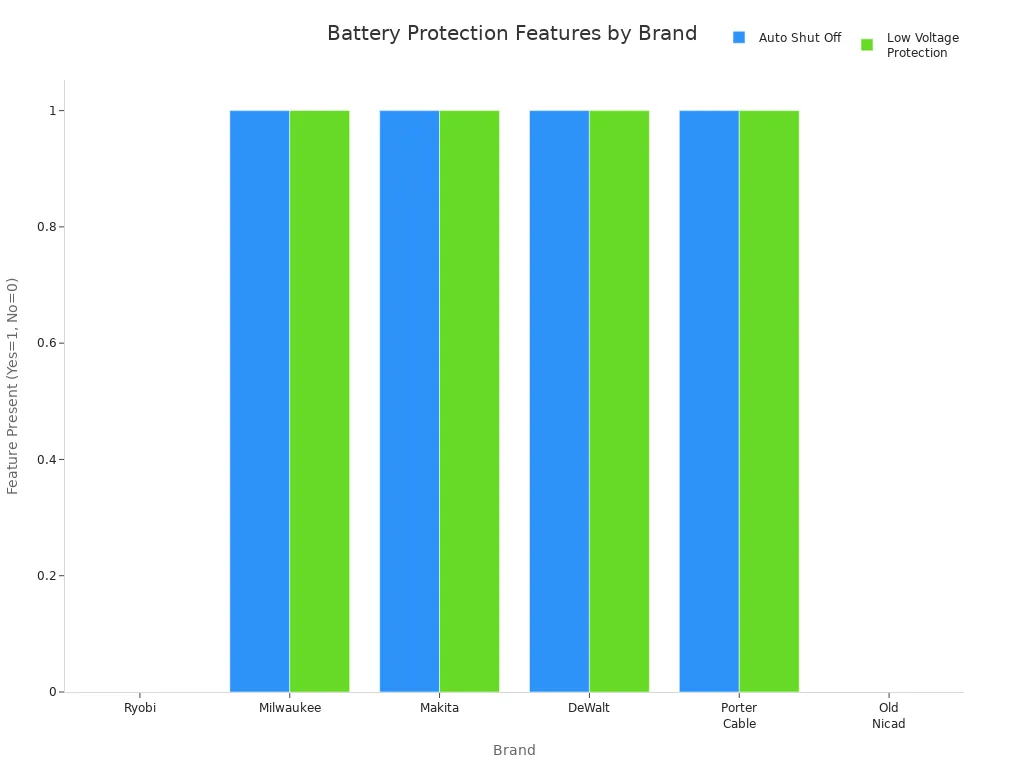
Here is a table that shows which brands have auto shut off and low voltage protection:
| Brand | Auto Shut Off | Low Voltage Protection |
|---|---|---|
| Ryobi | No | No |
| Milwaukee | Yes | Yes |
| Makita | Yes | Yes |
| DeWalt | Yes | Yes |
| Porter Cable | Yes | Yes |
| Old Nicad | No | No |
- Do not use batteries in Ryobi or old Nicad tools unless you are careful.
- Watch out for low voltage in tools that do not have built-in protection.
- Never try to change batteries by yourself. This can make them overheat or cause a short circuit.
Tip: Pick batteries with safety features and always follow what the manufacturer says. This keeps your tools working and helps you stay safe.
You should use a compatibility chart before using batteries from other brands. People often make mistakes when they mix brands. They forget about special designs, voltage changes, or safety systems.
- Brands usually do not work together well.
- Battery management systems are not the same for each brand.
- Voltage ratings can trick you when you look at different brands.
- Safety features might not match between brands.
- You need to check adapters carefully for each brand.
- Manufacturer rules help you stay safe with different brands.
- Always check compatibility to keep your tools safe.
Still have questions about battery compatibility? Check the answers below.
- Are power tool batteries interchangeable between brands?
Most power tool batteries are NOT interchangeable between brands. Each brand uses different voltage systems and connectors. You may need a battery adapter, but compatibility is not always guaranteed.
- Can I use a 20V battery on an 18V power tool?
In some cases, a 20V battery can work on an 18V tool if the platform is compatible (like certain brands). However, it is not always safe and may damage the tool.
- Do battery adapters really work?
Battery adapters can allow cross-brand compatibility, but they may affect performance and safety. Always choose high-quality adapters and verify compatibility before use.
- Which brands have compatible batteries?
Most major brands like Makita, Bosch, DeWalt, and Milwaukee use proprietary systems. Cross-brand compatibility is limited without adapters.
- How can I find the right replacement battery?
The best way is to check a battery compatibility chart or match the voltage, model number, and connector type. Always confirm before purchasing.
- Is it safe to use third-party replacement batteries?
Yes, if they are from reliable manufacturers. Poor-quality batteries can cause overheating, reduced performance, or safety risks.
Looking for Compatible Replacement Batteries?
We supply replacement batteries for:
Makita
Bosch
Milwaukee
✅ OEM supported
✅ Factory price
✅ Bulk order available
Are all power tool batteries interchangeable?
No. Most power tool batteries are not interchangeable across brands or voltage platforms.
What does 100+ models mean in this chart?
It refers to over 100 verified battery models across major tool brands including Makita, DeWalt, Bosch, and Milwaukee.
Can I use adapters for battery compatibility?
Adapters exist, but they may reduce safety and are not recommended for professional use.
👉 Contact us for quotation:https://drillmaxxtools.com/sample-page-2/contact-us/
Looking for reliable replacement batteries?
We supply compatible batteries for Makita, Bosch, DeWalt and more.
👉 Contact us for bulk pricing and OEM service.
Can I use different brand batteries on power tools?
Most power tool batteries are not cross-compatible between brands. Always check voltage, platform and connector design.
Does DrillMaxx supply power tool accessories?
Yes. DrillMaxx supplies professional drilling accessories including HSS drill bits, cobalt drill bits and customized solutions for industrial buyers.


