

You want to buy many power tools from China. You should find a good supplier. You also need to check the rules and plan shipping. China is a great place to buy power tools in bulk. You can find many types and good prices there. The Guide to Wholesale Power Tools in China explains why China is the leader in this field.
- The world power tools market was $39.45 billion in 2024.
- China is the top maker and seller in Asia-Pacific.
You get better quality and more suppliers in China. Careful supplier checks and strong quality tests help your business stay safe and make money.
Looking for reliable China power tool suppliers with factory pricing?
Contact us for direct quotes, MOQ details, and OEM/ODM solutions.
Key Takeaways
- China is the top place for power tools. The workers have good skills. The supply chain works well. This helps your business get better tools. You also get them faster.
- Always check if suppliers are real. Look at their certifications. Read reviews from other buyers. This helps you stay safe from scams. It makes sure you get good products.
- Know the rules when you import tools. Learn about safety standards. Make sure you have the right papers. This helps you avoid problems and delays.
- Pick the best way to ship your tools. Think about your budget and how fast you need them. Sea freight is cheaper for big orders. Air freight is quicker but costs more.
- Be kind to your suppliers. Respect how they do business. This helps you get better prices. It also makes deals go smoothly.
Guide to Wholesale Power Tools in China
Why Source from China
Many people pick China for power tools. There are clear reasons for this choice. China is the top place for buying and selling power tools. Many things make China a leader in this area.
- China has many skilled workers. They know how to make good power tools. Factories can make lots of tools fast.
- The supply chain in China works well. Makers get parts and materials nearby. This makes things quicker and more steady.
- Prices in China are lower than in most places. You can buy power tools for less money. This helps you save and earn more.
- China spends a lot on research and new ideas. Companies use new tech to make better tools. You see new designs and features each year.
If you use the guide, you see how these things help. You get many products and suppliers to pick from. Buying from China gives you more choices and better prices.
Tip: Always check and compare different suppliers in China. Pick ones with lots of experience in wholesale. This helps you find the right supplier for your needs.
Key Benefits
The guide shows many good things about buying power tools from China. You get more than just cheap prices. You also find new styles and smart tools.
- More people in China like to do DIY projects now. They want power tools that are cheap and useful. This makes factories offer more types of tools.
- Chinese companies now make smart power tools. Some tools use IoT and AI. You can check how they work in real time. This makes your job safer and easier.
- Many makers in China care about the planet. They use green tech and try to protect nature. This helps you follow new rules and meet what buyers want.
- You can order many tools at once and get them fast. The process in China is smooth. You save time and do not have to wait long.
| Benefit | How It Helps You |
|---|---|
| Competitive Pricing | Lower costs, higher profits |
| Product Variety | More choices for your customers |
| Advanced Technology | Access to smart and safe tools |
| Fast Production | Quick turnaround for large orders |
| Sustainable Options | Meet eco-friendly standards |
When you use the guide, you learn how to use these benefits. Buying from China helps your business grow and keeps you ahead.
Note: Always look for new trends in China. New tools and features come out often. If you stay updated, you can give your customers the best tools.
Find Suppliers
Online Platforms
You can look for power tools from China online. These websites help you find many suppliers. Here are some trusted platforms you can use:
- Alibaba
- Global Source
- Made in China
- DHgate
- Aliexpress
- 1688.com
- EC21
- MakePolo
- ECPlaza
- Tradekey
- Asian Products
- B2B Manufacturers
- Yiwubuy
- Banggood
- Taiwan Trade
- HC360
- GongChang
Each website has different ways to help you trade. Some sites are for big orders. Others are better for small suppliers. Always check what other buyers say about suppliers. Reviews tell you if a supplier is good or bad. Good reviews mean you can trust them. Bad reviews warn you about problems. Many people read reviews before they buy.
Tip: Read reviews before you pick a supplier. Good reviews help you stay safe.
Trade Shows
Trade shows in China let you meet suppliers in person. You can see the power tools and ask questions. Many trade shows are about tools and machines. The Canton Fair and China International Hardware Show are very big events. At these shows, you can look at products and talk to suppliers. You can also make new business friends. Meeting face-to-face helps you know if a supplier is good.
Supplier Types
There are three main supplier types in China. Manufacturers make the tools and can change them for you. They give you good prices. Trading companies help you find many products. They work with different factories. Wholesalers buy lots of tools and sell to stores or buyers. Each type has something good. Manufacturers give you more control and lower prices. Trading companies make it easy to buy many things. Wholesalers help you buy a lot at once.
Note: Pick the supplier type that fits your business. This helps you get the best deal.
Supplier Verification
Check Certifications
When you buy power tools from China, you need to check certifications. These certificates show the supplier follows safety and quality rules. If you want to sell in the US, EU, or Australia, look for special marks. These marks prove the tools passed important tests.
| Region | Certification | Description |
|---|---|---|
| US | UL | Safety testing and inspection for equipment and materials |
| EU | CE | Conformity with health, safety, and environmental protection |
| Australia | SAA | Compliance with local safety regulations for electrical products |
| Australia | RCM | Electrical safety and electromagnetic compatibility requirements |
Ask the supplier for copies of these certificates before you buy. This step helps you avoid problems with customs and keeps things easy. If you skip this, you might get bad tools or have legal trouble.
Tip: Always check the date and number on each certificate. This helps you make sure the supplier is honest and your order is good.
Factory Audits
Factory audits help you know if a supplier can meet your needs. Audits check if the supplier makes good tools and delivers on time. You can ask someone else to audit or visit the factory yourself. Audits look at many things:
- Security audits check if the supplier ships things safely.
- Capability audits show if the supplier can handle your order size.
- Social compliance audits make sure workers are treated fairly.
- Quality audits test how the supplier makes good products.
- Environmental audits check if the supplier follows green rules.
A good audit shows you what the supplier does well and what needs work. You learn if the supplier can keep up with your plans and keep quality high.
Warning Signs
You need to watch for warning signs when picking a supplier. Some suppliers may not care about quality or may try to trick you. Look for these signs:
- No references from other buyers
- Company details or product reports do not match
- Payment terms change suddenly
- Answers to your questions are unclear
- Prices are too low for good quality
If you see any of these, stop and check again. Good suppliers care about quality and answer your questions clearly. You keep your business safe by staying alert and picking trusted suppliers.
Note: Careful supplier checks keep your sourcing safe and help you give your customers good tools.
Importing Power Tools from China
Compliance
When you start importing power tools from China, you must follow strict rules. Each country has its own laws for importing power tools. You need to check these rules before you buy anything. If you skip this step, you may face delays or lose money.
For the United States and the European Union, you must pay close attention to compliance. You need to make sure your power tools meet all safety and labeling rules. Here are some key points you should know:
- You must classify, label, and package hazardous substances as required by local regulations.
- The European Union may set special rules for some hazardous materials. These rules can change what you need to do.
- If you import into the EU, you must follow the European Commission’s rules for labeling and packaging.
- In the United States, you must also follow strict labeling and safety standards.
If you want to sell on Amazon FBA or to wholesale buyers, you must show proof of compliance. Amazon checks your documents before you can list your products. Wholesale buyers also ask for certificates. Always ask your supplier in China for these documents before you ship your order.
Tip: Keep all compliance documents in a safe place. Customs officers may ask for them when your shipment arrives.
HS Codes
HS codes help you classify your power tools when importing power tools from China. Customs officers use these codes to check your shipment. You must use the correct HS code for each type of tool. If you use the wrong code, you may pay extra fees or face delays.
Here is a table with common HS codes for power tools:
| HS Code | Description |
|---|---|
| 8467 | Tools for working in the hand, pneumatic, hydraulic or with self-contained electric or non-electric motor |
| 8467.21 | Drills of all kinds |
| 8467.22 | Saws |
| 8467.29 | Other (includes sanders, grinders, planers, etc.) |
| 8467.11 | Pneumatic tools, rotary type |
| 8467.19 | Other pneumatic tools |
| 8467.81 | Chain saws |
| 8467.89 | Other tools |
| 8467.21 | Drills, cordless |
| 8467.22 | Saws, cordless |
| 8467.29 | Other cordless tools |
You can also see how these codes are used in the chart below:
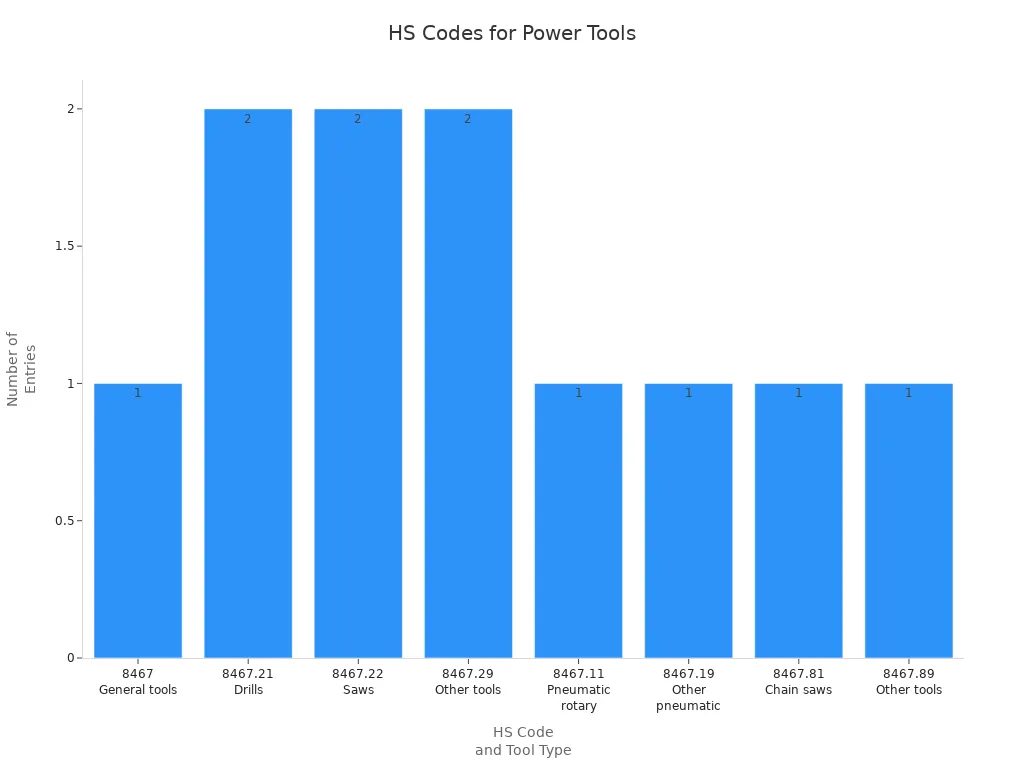
When importing power tools from China, always ask your supplier for the correct HS code. This helps you avoid mistakes and keeps your shipment moving smoothly. If you use Amazon FBA, you must enter the right HS code in your product listing. Wholesale importers also need to check HS codes to plan for taxes and duties.
Note: Customs officers use HS codes to decide how much tax you pay. Double-check your codes before you ship.
Tariffs and Duties
Tariffs and duties are extra costs you pay when importing power tools from China. These fees depend on the country where you import your tools. You must know the rates before you place your order. This helps you plan your budget and set your prices.
Here is a table with the latest tariff rates for importing power tools from China:
| Country | 2025 Tariff Rate |
|---|---|
| United States | 30% |
| European Union | 15% |
| Global Base Rate | 10% |
You can also see the differences in this chart:
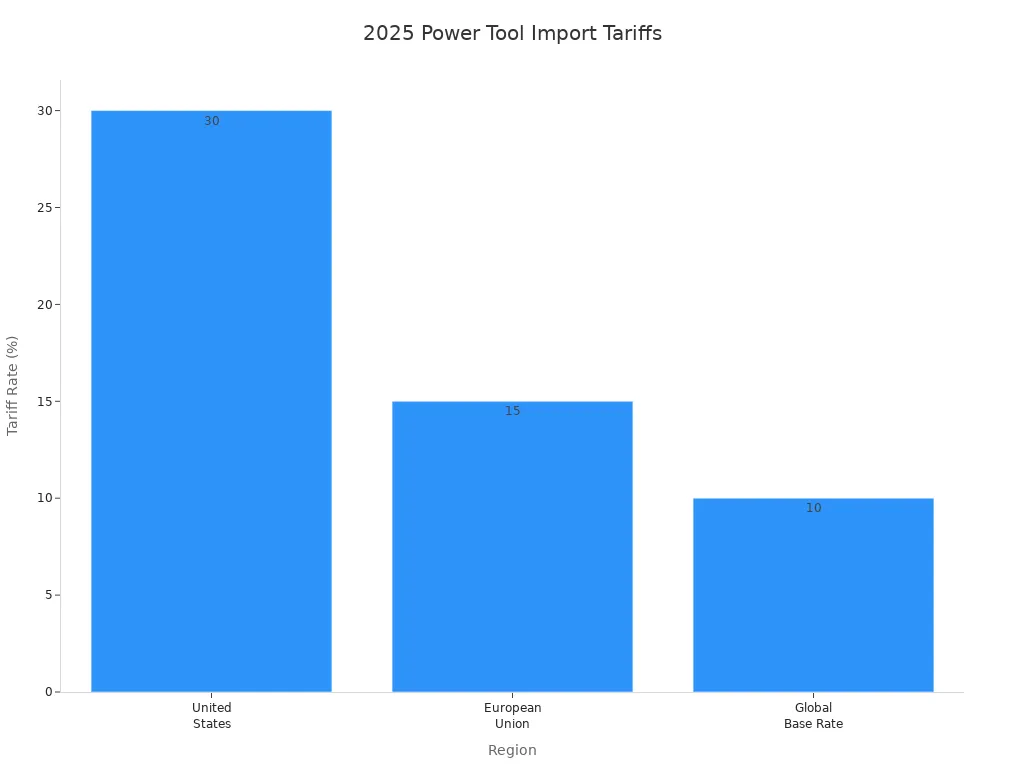
When importing power tools from China, you must add these costs to your total price. If you use Amazon FBA, Amazon may charge you extra for customs clearance. Wholesale importers must pay these fees before they can sell the tools. Always ask your supplier if the price includes tariffs and duties. If not, you must pay them when your shipment arrives.
Tip: Use a customs broker if you feel unsure about tariffs and duties. Brokers help you avoid mistakes and save time.
When you follow these steps, importing power tools from China becomes easier. You avoid delays, save money, and keep your business running smoothly. Always check compliance, HS codes, and tariffs before you buy. This helps you succeed in the wholesale market and keeps your customers happy.
Cost and Contracts
Pricing
You need to understand how suppliers set prices for power tools in China. Most suppliers give you a quote based on the type, brand, and quantity of tools you want. Prices can change if you order more units or ask for custom features. You should always ask for a detailed price list. This helps you compare offers and spot any extra costs. Some suppliers offer discounts for large orders. You can use these deals to save money. Always check if the price includes shipping, packaging, and taxes.
Tip: Ask for a breakdown of all costs before you agree to buy. This helps you avoid surprises later.
Hidden Fees
When you import power tools from China, you may face hidden fees. These costs can add up quickly and affect your profit. You should watch for these common fees:
- Product cost
- Import duties and GST
- Brokerage and handling fees
- Inspection and testing charges
- Warehousing and inland transport
Tariffs can reach up to 29% of your total cost. Shipping fees also grow with the size and weight of your order. You may pay extra if your paperwork is not correct. Problems like incomplete invoices, missing packing lists, or wrong tariff codes can cause delays and extra charges.
Note: Always check your documents before shipping. Clear paperwork helps you avoid extra fees at customs.
Payment Terms
Chinese suppliers use different payment terms. The most common is the 30/70 TT arrangement. You pay 30% when you place your order. You pay the remaining 70% before the supplier ships your tools. Some suppliers ask for a higher deposit, up to 50%. You pay the balance when you get your goods or before they leave China.
| Payment Type | Percentage Range |
|---|---|
| Deposit | 30%-50% |
| Balance | 50%-70% |
You should know the risks and benefits of each payment term. If you pay in full before you get your tools, you risk losing money if the supplier does not deliver. You may also get defective products. Paying in stages helps you manage your cash flow and build trust with your supplier.
Tip: Use secure payment methods and keep records of all transactions. This protects your business and helps you solve problems if they happen.
Logistics
Shipping Options
You have many shipping choices when you import power tools from China. Each shipping method has different costs and times. You should pick the shipping option that fits your needs and budget.
Here is a table to help you compare the main shipping methods:
| Shipping Method | Cost Comparison | Transit Time |
|---|---|---|
| Sea Freight | Cheapest for large volumes (over 1 cbm, 100kg) | 21-30 days |
| Air Freight | 12-16 times more expensive than sea freight | 3-5 days |
| Rail Freight | Faster than sea, cheaper than air | 15-20 days |
Sea shipping works best for big orders. You save money when you use sea shipping for large shipments. Air shipping costs more, but you get your power tools fast. Rail shipping gives you a middle choice. You pay less than air shipping and get your order faster than sea shipping. You should talk to your supplier about the best shipping method. Some suppliers offer help with shipping paperwork. You can also use a freight forwarder to manage your shipping.
Tip: Always check the shipping schedule before you order. Delays can happen during busy seasons.
Customs
Customs checks your shipment when it arrives in your country. You must follow all customs rules for shipping power tools. Customs officers look at your shipping documents. They check your invoice, packing list, and shipping labels. If your shipping paperwork is wrong, customs can hold your shipment. You may pay extra fees if you make mistakes.
You should ask your supplier for the correct shipping documents. You can also hire a customs broker to help with shipping. A broker knows the rules and can speed up your shipping process. You must pay duties and taxes before you get your shipment. Customs may inspect your power tools to make sure they are safe.
Note: Keep copies of all shipping documents. Good records help you solve problems with customs.
Insurance
Shipping insurance protects your power tools during shipping. You can choose from different types of shipping insurance. Each type covers different risks. Here is a table to help you understand your options:
| Type of Insurance | Coverage Details |
|---|---|
| All-risk insurance | Covers nearly all external causes of loss or damage, including theft, mishandling, and breakage. Ideal for high-value or fragile items. |
| Named perils insurance | Covers only specific risks listed in the policy, such as fire or theft. A flexible option for targeted protection. |
| Total-loss insurance | Covers only complete loss of items, such as when a package goes missing. Best for low-value items. |
You should pick the shipping insurance that matches your shipment. All-risk insurance gives you the most protection. Named perils insurance works if you want to cover certain risks. Total-loss insurance costs less but only pays if you lose everything. You should ask your shipping company about insurance options. Some shipping companies include basic insurance in the shipping price. You can buy extra shipping insurance for more coverage.
Tip: Always read the shipping insurance policy. Make sure you know what is covered before you ship your power tools.
Quality Control
Pre-Shipment Checks
You must check quality before your power tools leave China. Pre-shipment checks help you find problems early. These checks make sure your order is good and meets your needs. You can use a checklist to look at each tool. This step keeps your business safe and makes your customers happy.
Here is a table that shows what to check before shipping:
| Aspect of Inspection | Importance |
|---|---|
| Comprehensive pre-shipment inspection | Makes sure only good products go to buyers. |
| Product quality checks | Protects your business and keeps customers happy. |
| Compliance with regulations | Makes sure products follow safety and legal rules. |
You should also do these things: Check if the tools match your order and are good quality. Make sure the packaging and labels are right. Find any problems before you ship.
Pre-shipment checks help you find bad products and make suppliers fix them. This step is important for good quality control.
Ongoing Inspections
You need to keep checking quality after the first shipment. Ongoing checks help you find problems early and keep your tools good. You should look at your power tools before and after each use. Weekly checks help you see if anything is broken or worn out.
| Inspection Type | Frequency | Purpose |
|---|---|---|
| Before Every Use | Each use | Make sure tools are safe and work well. |
| After Every Use | Each use | Look for damage or problems after using the tools. |
| Weekly Inspection | Weekly | Check all parts for damage and add oil if needed. |
| Scheduled Extensive Inspections | As needed | Deep checks for broken tools and plan repairs. |
Regular checks keep your tools safe and help your business.
Handling Defects
Sometimes you may find problems in your power tools. Good quality control means you fix these problems fast. You should make clear rules with your supplier about quality, returns, and warranties. Always ask for samples before you order a lot to check quality.
Best ways to handle defects include: Set clear rules with suppliers to stop defects. Use a checklist to find problems early. Make rules for what happens if there are too many defects. Keep notes about refunds, repairs, or replacements.
You can use defect data to make your tools better over time. Good quality control helps you build trust with customers and suppliers. You keep your business safe by making quality your main goal.
Importing Power Tools: Best Practices
Building Relationships
You make strong relationships with your supplier in China by learning about business culture. Respecting traditions and being honest helps you earn trust. Spend time making personal connections, called Guanxi. This helps you get better deals and work together for a long time. Visiting your supplier in China shows you care. Meeting face-to-face helps you fix problems quickly. Talking honestly and being steady makes your reputation good. Your supplier gives you better deals if they trust you.
- Learn and respect Chinese business culture.
- Build Guanxi with your supplier to earn trust.
- Be honest and keep your promises.
- Visit your supplier in China often.
- Work together for good results.
Thinking about the future helps you get better prices and quality. Suppliers in China like buyers who plan ahead. Set clear goals and give feedback often. Meeting with your supplier in China keeps things running well.
- Plan regular updates with your supplier.
- Say what you need clearly.
- Make a system for feedback to improve quality.
Tip: Building good relationships in China takes time. Be patient and respect business customs.
Avoiding Pitfalls
There are many risks when you import power tools from China. Mistakes in paperwork or customs can slow things down and cost money. Check every detail before you ship anything. Do not only listen to your supplier in China about tariffs or rules. Some advice may sound safe but can break laws in your country. You need to do your own research and follow your country’s rules.
- U.S. companies sometimes make mistakes by trusting supplier advice on tariffs.
- Suppliers in China may suggest shortcuts that are not legal.
- Always check things yourself for sourcing and rules.
Common problems are wrong values, wrong codes, missing origin marks, and incomplete papers. You can avoid these by training your team and working with good brokers. Written steps help you keep track of everything. You protect your business by keeping records and checking quality at each step.
- Check values and codes for every shipment.
- Mark where products come from on all items.
- Follow wood packaging rules for imports from China.
- Make sure all documents are complete and correct.
- File security papers on time.
- Follow all rules from partner agencies.
Note: Careful planning and good paperwork keep your sourcing from China safe and legal.
Staying Updated
You need to know about changes in China’s power tool market. Government rules in China help the industry grow and start new projects. More people in China do D.I.Y. jobs, so they buy more power tools in cities and villages. Energy rules and not enough raw materials in China can make sourcing harder. New money for building things in China helps the economy.
- Government rules in China help the power tool industry grow.
- D.I.Y. trends in China make more people buy power tools.
- Energy rules and not enough materials in China make things harder.
- New investments in China help businesses after COVID-19.
Watch for news about rules and market changes in China. Join trade groups and read news from China to keep your business ahead. Staying updated helps you find new chances and avoid problems. You make quality better and keep good supplier relationships by knowing what is happening in China.
Tip: Sign up for industry news and go to trade shows in China. This helps your business stay ready for changes.
You can do well importing power tools from China if you follow steps. First, learn about the tools and what they do. Then, check suppliers and ask for samples to see quality. Make sure your products follow local rules and pass checks. Pick the best way to ship and get your papers ready. Always check suppliers, follow rules, and watch quality. To help your business grow, work with more suppliers in China. Build good relationships and go to trade shows. Use websites and research to find new chances in China.
- Ask suppliers for real test reports.
- Work with local partners in China to make your supply chain faster.
FAQ
What documents do you need to import power tools from China?
You must have an invoice and a packing list. You also need a bill of lading and compliance certificates. Customs officers might ask for HS codes and proof you paid. Keep these papers ready so importing is easy.
How do you find reliable power tool suppliers in China?
You can look on trusted websites or go to trade shows. Read what other buyers say about suppliers. Ask for certificates to check if they are real. Good suppliers answer questions and share business details.
What is the best way to check product quality before shipping?
Order samples to see if the tools are good. Hire a third-party company to check your order before it ships. This helps you find problems early and makes sure the tools are right.
Can you import power tools for Amazon FBA?
Yes, you can bring power tools to Amazon FBA. Your products must follow Amazon’s safety and rule requirements. Give all needed papers and use the right HS codes for your shipment.
Need quality power tools at competitive wholesale prices?
Get in touch today for bulk order pricing and professional sourcing support.


